
What Another Season of Guessing Costs You
Every winter you put off this decision, you're either overpaying for insulation you don't need or losing heat (and money) through a door that isn't built for Ohio's cold stretches. Multiply that by a season of ice, wind, and furnace runtime, and the wrong call isn't free — it shows up on your energy bill and in a garage that never warms up enough to actually use. If you and your spouse have been going back and forth on this, here's the version you can actually send them.
What R-Value Actually Measures
R-value measures resistance to heat flow. Higher R-value means the door slows down heat transfer better — so in winter, less warm air escapes through the garage door, and in summer, less heat soaks in. For garage doors, that number usually comes from either polystyrene (rigid foam board) or polyurethane (foam injected into the panel), with polyurethane typically scoring higher because it also seals the inside of the panel and stiffens the whole door.
Manufacturers list R-values that usually run from around R-6 on basic insulated doors up to R-18 or higher on premium polyurethane models. An uninsulated steel door is essentially R-0 to R-2 — it's just a sheet of metal with no thermal break.
Who Actually Benefits From an Insulated Door
- Attached garages: If your garage shares a wall with living space, an uninsulated door lets cold air sit against that wall all winter, which makes the adjacent room harder to heat.
- Rooms above the garage: A bonus room, bedroom, or office over the garage will feel the temperature swings in that space directly. Insulation here isn't cosmetic — it's comfort.
- Anyone who uses the garage as a workspace: Workshops, home gyms, or a spot where you tinker on weekends need a door that doesn't turn the whole room into an icebox the moment it drops below freezing.
- Anyone who parks and walks straight into the house: An insulated door keeps the garage closer to outdoor-but-tolerable instead of brutally cold, which matters a lot during a Central Ohio cold snap with ice on the ground.
- Humid summer months: Insulation also reduces condensation on the inside of the door, which matters when summer humidity meets a cooler garage interior.
Who's Paying for Nothing
- Detached garages with no heated space nearby: If nothing on the other side of that door needs to stay warm, a high R-value door is solving a problem you don't have.
- Garages used only for parking and storage: If you're not spending time out there and nothing adjacent is climate-sensitive, the insulation upgrade is mostly about noise reduction and door rigidity, not heat savings.
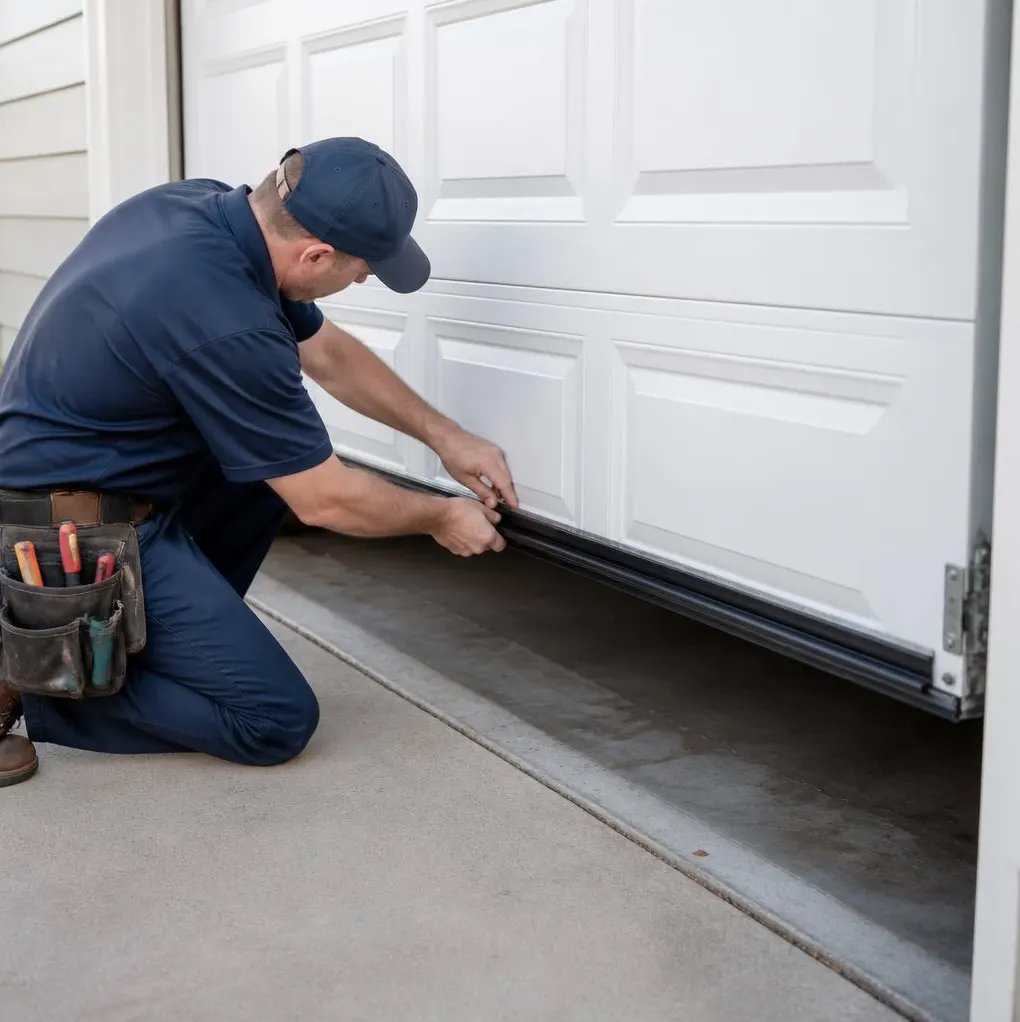
- Homes where the garage is already sealed poorly elsewhere: If there are big gaps at the weatherstripping, a damaged bottom seal, or an old worn-out door that doesn't close flush, you'll lose more heat through those gaps than you'll ever save by upgrading the panel's R-value. Fix the seal first.
The Trade-Offs Nobody Mentions
Insulated doors are heavier. That's not a minor detail — it affects your springs, your opener, and your long-term maintenance. A door that was sized for a lightweight uninsulated panel may need upgraded springs or a stronger opener to handle a polyurethane replacement without strain. That's a real cost that should be part of the comparison, not a surprise after installation.
Polystyrene doors are generally the cheaper insulated option, with the foam board inserted but not fully bonded to the steel. Polyurethane doors cost more upfront but insulate better and tend to be quieter and more rigid, which matters here when wind gusts during spring storm season can rattle a loose panel. As a rough national range, expect insulated doors to run higher than basic uninsulated steel doors — the gap widens with higher R-values and larger sizes, so get actual quotes for your door size before deciding.
How to Actually Settle the Argument
Walk out to the garage together and answer two questions honestly: Is there living space on the other side of that wall or above it, and do either of you spend real time out there in winter? If yes to either, insulation earns its keep. If the garage is detached, rarely used, and purely for parking, you're better off putting that money into a well-sealed, properly maintained uninsulated door and saving the difference.
When to Call Galloway Garage Door
If you're leaning toward replacing an old door anyway — rust at the bottom panel, dents from years of salt and ice, or an opener straining to lift it — that's the right moment to decide on insulation rather than bolt it on later. Our Garage Door Installation team can walk your specific garage, tell you honestly whether insulation will make a difference for your layout, and make sure your springs and opener are rated for whatever door you choose. If you're not ready to replace anything yet but want to know whether your current door is actually sealing well, our Garage Door Maintenance visit checks weatherstripping, panel condition, and balance so you're not blaming R-value for a problem that's really a worn-out seal.
If you're in Galloway, OH or anywhere between West Jefferson and West Columbus and you want a straight answer instead of a sales pitch, call Galloway Garage Door. We'll tell you what you actually need before winter sets in.