
What We Find on Service Calls About "The Opener Just Died"
A common call we get is a homeowner whose garage door opener has stopped working, and they assume it just reached the end of its life. When we get out there, the opener motor is often fine. The real problem is that the door has been out of balance for months, maybe longer, and the opener has been quietly doing the heavy lifting that a properly tensioned spring system should be handling. Eventually the gears strip, the belt or chain stretches, or the motor overheats and shuts itself down. The opener didn't fail on its own. The door made it fail.
What an Unbalanced Door Does to Your Opener
A garage door is supposed to be balanced by its springs, not its opener. When the springs are correctly tensioned, a disconnected door should stay roughly where you leave it, whether that's open, closed, or halfway up. The opener's only job is to start and stop the motion and hold the door at the top or bottom.
When a door is out of balance, usually because a spring has weakened or lost tension, the opener has to pull extra weight every time it runs. Over weeks and months, that extra strain shows up as:
- A grinding or straining sound when the door opens, especially in the first foot or two of travel
- The opener reversing on its own partway through a cycle
- A door that opens slower than it used to, or closes faster and slams
- Premature wear on the drive gear, belt, or chain
- The logic board tripping a safety sensor or force limit more often than it should
None of that is normal wear on the opener itself. It's the opener compensating for a door that should be carrying its own weight.
Tools You'll Need
- A step stool or ladder tall enough to reach the release cord comfortably
- Work gloves
- A helper is useful but not required
- Good lighting if you're doing this in the evening after work
How to Test Your Garage Door's Balance
- Close the door fully. You want to start from a known position.
- Locate the release cord (the red-handled rope hanging from the opener trolley) and pull it to disconnect the door from the opener. The door should now move freely by hand.
- Lift the door manually about halfway up. Go slow and keep your hands clear of the track and hinges.
- Let go of the door and watch what it does. A balanced door will stay put or drift down just slightly. It should not fall, and it should not shoot upward on its own.
- Repeat the test at the three-quarter position. Balance can feel fine at one height and off at another, especially on older doors.
- Note which direction the door moves. A door that falls shut is usually dealing with weak or broken springs. A door that flies upward has springs wound too tight, which is just as hard on the opener and the track.
- Reconnect the opener by pulling the release cord again (or manually running the trolley back until it clicks into the track) before you use the door normally again.
What's a Homeowner Job and What Needs a Technician
Performing the balance test above is safe for a homeowner to do. Lifting the door by hand, watching how it behaves, and reconnecting the opener afterward doesn't require any special tools or training.
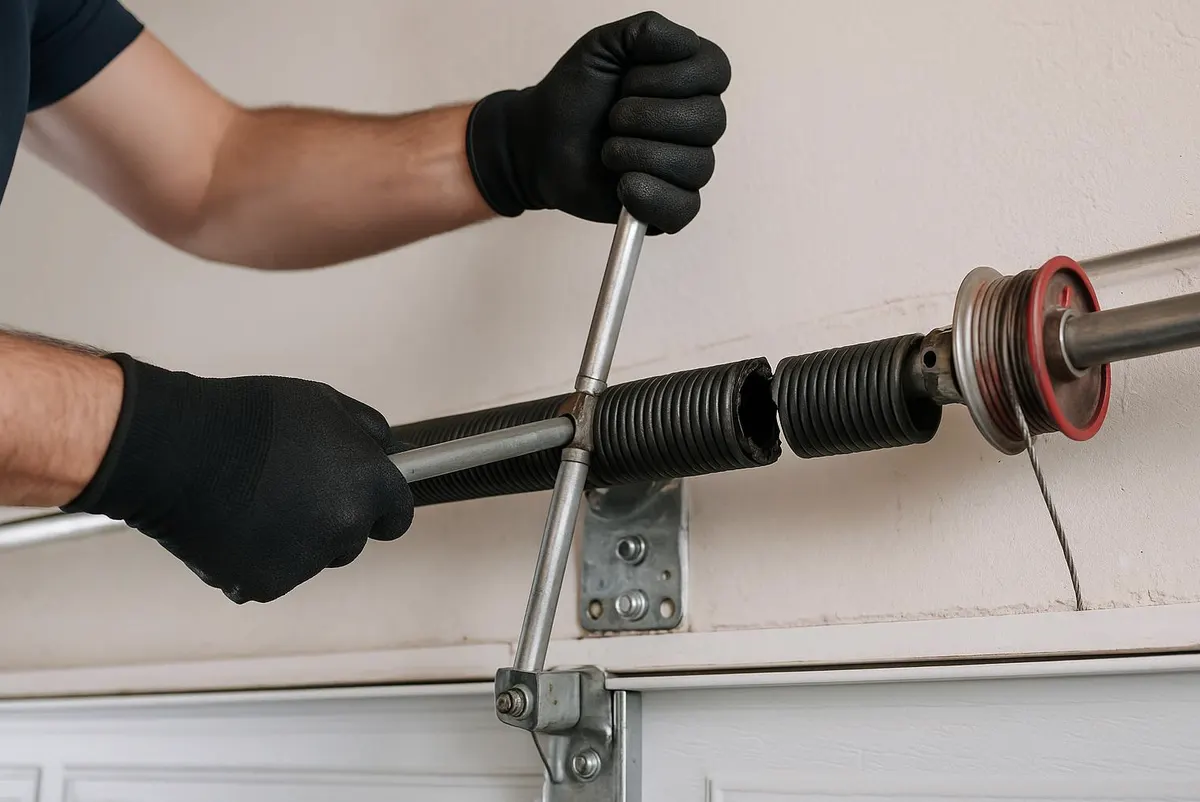
Everything after that point is technician work, and that's not us being cautious for no reason. Torsion springs are wound under extreme tension, and adjusting, repairing, or replacing them requires winding bars, specific technique, and knowing the correct spring size for your door's weight. An improperly adjusted spring can snap with enough force to cause serious injury. If your test showed the door falling, shooting up, or feeling noticeably heavier on one side than the other, that's a spring adjustment or replacement, not a DIY fix.
Why Balance Matters More as Temperatures Drop
Spring tension shifts with temperature, and this part of Ohio sees big seasonal swings. As we head into colder weather, steel springs contract slightly and can feel tighter or behave differently than they did over the humid summer months. A door that was borderline balanced in September can start showing real symptoms once overnight temperatures drop. Add in road salt and moisture tracked in from icy driveways, which speeds up corrosion on hardware and track components, and a door that's already working harder than it should wears out faster through the winter months. Getting the balance checked now, before the cold settles in, is cheaper than replacing an opener motor in January.
When to Call Galloway Garage Door
If your balance test shows the door isn't holding position, or you're hearing the opener strain, grind, or reverse unexpectedly, it's time to call us. We'll check spring tension, inspect cables and rollers for wear, and either rebalance the system or recommend a garage door spring replacement if the springs are too far gone to adjust safely. If the opener itself has already been damaged by months of extra strain, we can evaluate whether it needs garage door opener repair or a full replacement, and walk you through what makes sense for your door and budget.
If you're in Galloway, West Jefferson, Grove City, Hilliard, Georgesville, Lincoln Village, West Columbus, or Plain City and your garage door isn't behaving the way it used to, give Galloway Garage Door a call before winter puts more stress on it.